Open source
Public code you can inspect, commit by commit.
The tooling behind our work is open source. On Stellar we are core contributors to the official CLI and build other tools around it; we also build on XRPL. Each tool has its own page, with every figure dated.
Foundations hire us to build and maintain them. The Stellar Development Foundation case
Tools
The tools we build and maintain.
- Stellar CLI Developer tooling
 Stellar Core contributors to Stellar’s official command line: plugins, typed contract calls, key management. ~20%of its commits, 2022 to 2025
- Stellar Scaffold Developer tooling Stellar One command from an empty folder to contracts, typed clients and a web frontend. 111projects build on it
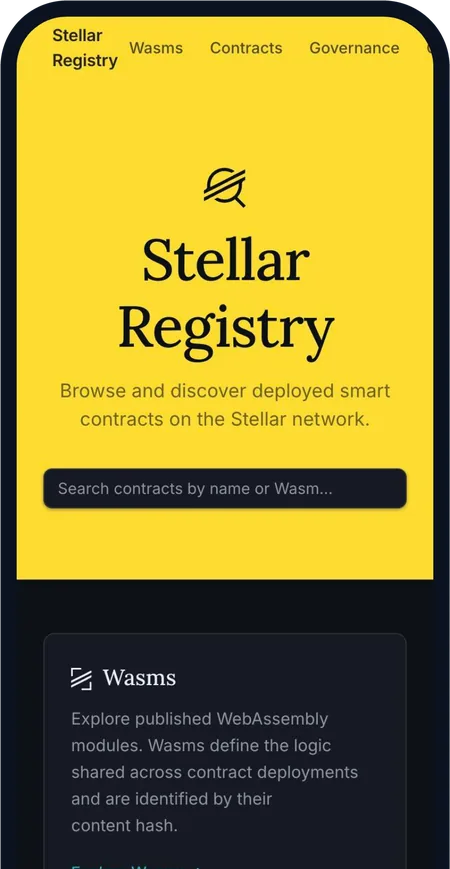
- Stellar Registry Developer tooling Stellar Publish a contract once, then deploy and resolve it by name on any network. 166,833mainnet calls
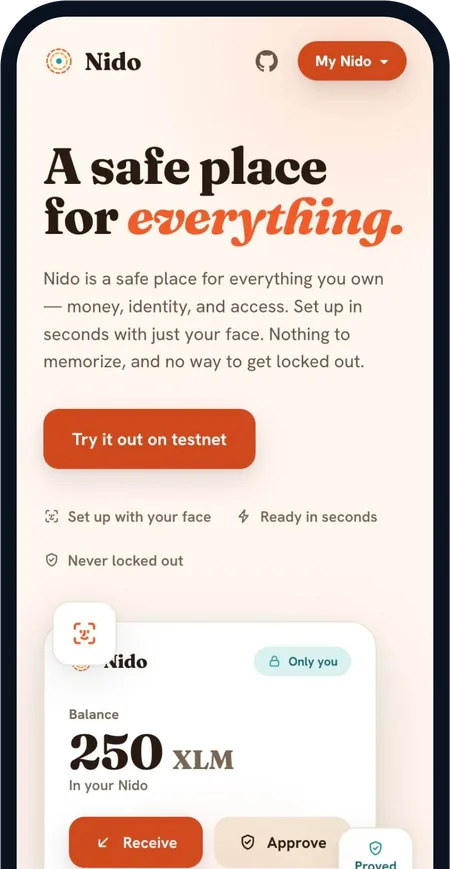
- Nido Wallet Stellar Passkeys instead of seed phrases, with spending limits enforced onchain. 54mainnet wallets in four days
- Perch Onchain policies Stellar What each key may do, written as a reviewable document and enforced onchain. 2,106npm downloads since September
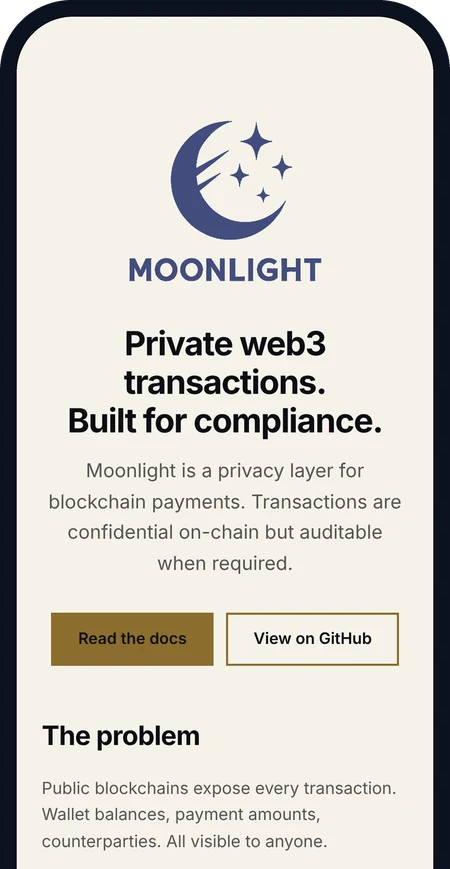
- Moonlight Privacy Stellar Private, not anonymous: payments known to the provider, not to the market. 0critical or high audit findings
- Tansu Governance Stellar Onchain governance for open-source projects, where the Stellar Community Fund votes its Public Goods Award. ~$1.4Mpublic goods funding voted on it
- GhostSig Wallet
 XRPL and Stellar One passkey wallet for XRPL and Stellar, with keys derived at each signature and never stored. 2wallet kits ship it by default
How we count
A project counts when its public repo uses a tool in code (configuration, dependencies, imports or CLI scripts), or when its contracts use it onchain. Forks count once, and a project using several tools counts once in the total.
A tool’s own repo never counts toward that tool; our other tools and our team’s own projects count like any other project. Pages that only mention a tool do not count. Code search does not index every repo, so project counts are floors, and testnet counts include our own testing.
Every figure carries the date it was counted. Counts that only grow, such as downloads, calls and wallets, are as of that date.
Standards and contributions
Beyond our own tools: the standards we wrote and our code in SDKs, wallets and libraries, across the networks we work on.
Standards
- SEP-53, Sign and Verify Messages
Signing and verifying offchain messages with Stellar keys. Co-authored by Pamphile Roy.
- SEP-61, Trustline Onboarder
Onboarding users to regulated assets, including assets that need issuer authorization. By Willem Wyndham, Enzo Soyer, Pamphile Roy and Hugo Heer.
- SEP-52, Key Sharing Method
A method for sharing Stellar keys. Co-authored by Pamphile Roy.
-
Contract admin and upgrades
A common admin and upgrade interface for Soroban contracts, drafted by Willem Wyndham and Pamela Selle with a Stellar Development Foundation engineer.
In SDKs, wallets and libraries
- JavaScript SDK contract client
contract.Client and AssembledTransaction in Stellar’s official JavaScript SDK, written by Chad Ostrowski.
- Rust crates
sep5 key derivation and stellar-ledger signing (225k and 87k downloads, November 2026), and a Stellar RPC client. By Willem Wyndham and Elizabeth Engelman.
- Trezor Stellar package
Trezor’s Stellar package upgraded to Stellar SDK v17 by Pamela Selle.
-
XRPL Rust library
Fixes contributed upstream by Willem Wyndham.
Early tools and demos
-
Loam and SmartDeploy
The tools we started in 2023, from which Stellar Scaffold and the Stellar Registry grew. The crates of all four have 125,107 downloads in total (November 2, 2026).
-
Carbon Coin
A multi-purpose token with a 2-of-3 multisig issuer, freeze and clawback, built by Chad Ostrowski.


