Ecosystem · Stellar
Stellar Development Foundation
We build and maintain tooling the Stellar ecosystem runs on: Stellar Scaffold, the Stellar CLI plugin system, Stellar Registry and Nido, our open-source passkey wallet. Our principal engineer Fabricius Zatti is a core contributor to the Stellar Architect Program.
- Client
- Stellar Development Foundation
- Role
- Developer tooling and public goods
- Network
-
 Stellar
- Status
- Maintained as public goods
- Year
- 2021-today
- Engagement
- Public goods and Architect Program
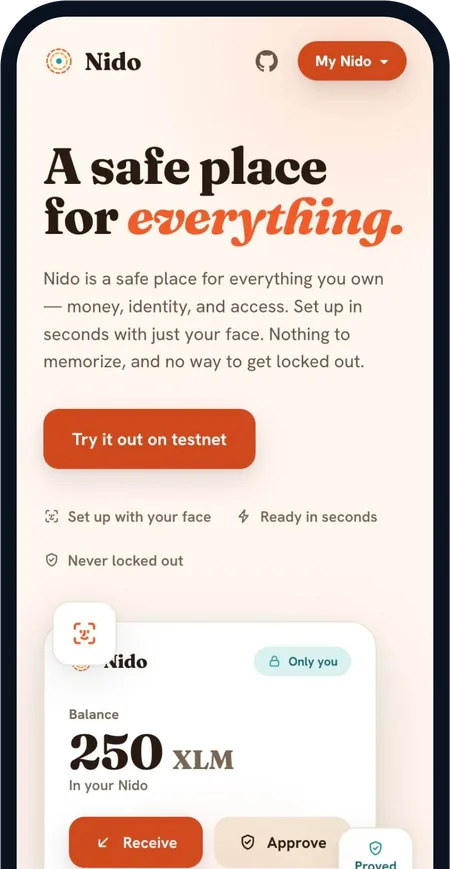
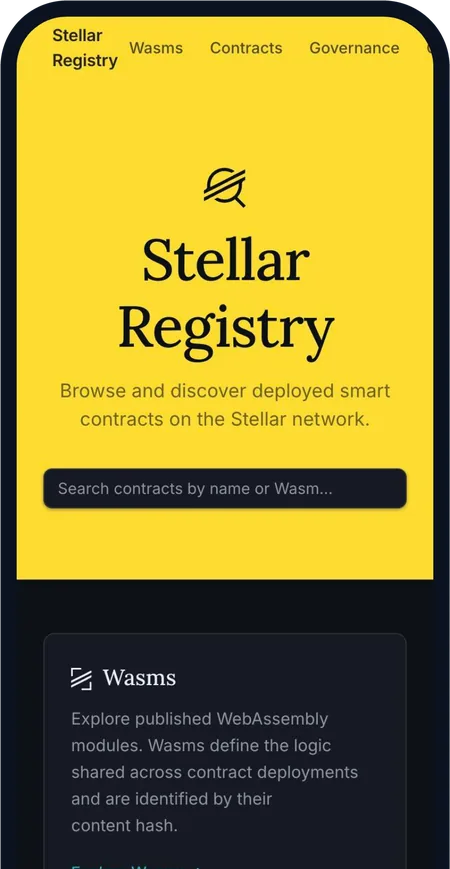
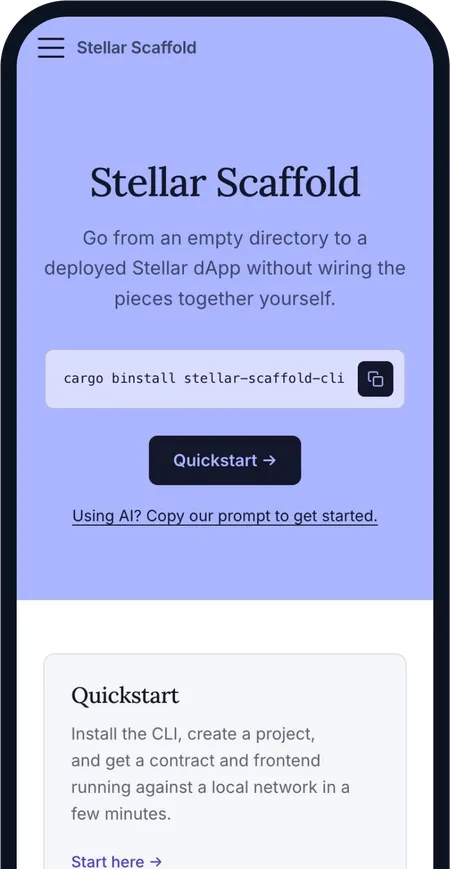
Nido, Stellar Scaffold and Stellar Registry, on their own sites: three of the tools we build and maintain.
“We searched far and wide for capable teams to help us. We found one.”
 Tomer Weller, Chief Product Officer, Stellar Development Foundation
Challenge
When Stellar added smart contracts with Soroban, it needed developer tooling to match: a command line that builds, deploys and calls contracts, typed clients for frontends, and a way to start a project without assembling it by hand. The Foundation looked for teams that could build that tooling, and keep maintaining it.
DevX audit
In 2022, as Stellar was adding smart contracts with Soroban, we ran a DevX audit of its developer path. It produced three documents for the Stellar team: a proposal for the organization and behavior of the Soroban CLI, a deeper design of its invoke command, and an analysis of the Soroban docs, with a new structure and the pages they were missing.
The Stellar team took up the proposals, and we have shipped many of their recommendations together since: the CLI's plugin system and its TypeScript bindings came out of that work.
Solution
We became core contributors to the Stellar CLI, the network's official command-line tool, and built the parts developers use every day: the plugin system, contract calls generated from each contract's interface, key management and TypeScript client generation.
On top of it we built Stellar Scaffold and the Stellar Registry, maintained as public goods with funding from the Stellar Community Fund. Fabricius Zatti, a principal engineer on our team, is also a core contributor to the Stellar Architect Program, working on institutional proposals.
Architecture highlights
- Stellar CLI: plugin system, typed contract calls, SEP-5 key management, Ledger signing
- Stellar Scaffold: one command from an empty folder to contracts, a frontend, a local network and typed clients
- Stellar Registry: an onchain package manager for Soroban contracts, audited by Veridise with no findings, on mainnet since July 2026
- Nido: our open-source passkey wallet, in a curated mainnet release since October 2026
- JavaScript SDK: contract.Client and AssembledTransaction in Stellar's official SDK
- Standards: co-authors of SEP-53 (final), SEP-61 and SEP-52 (drafts)
Outcome
Most teams building contracts on Stellar start with the Stellar CLI, and Stellar Scaffold is listed in the official Stellar docs. The tooling stays maintained: each public good runs on a quarterly proposal and review. On November 2, 2026, 137 projects used at least one of our tools, 111 of them building on Stellar Scaffold, and the Stellar Community Fund votes its Public Goods Award on Tansu (how we count).


